
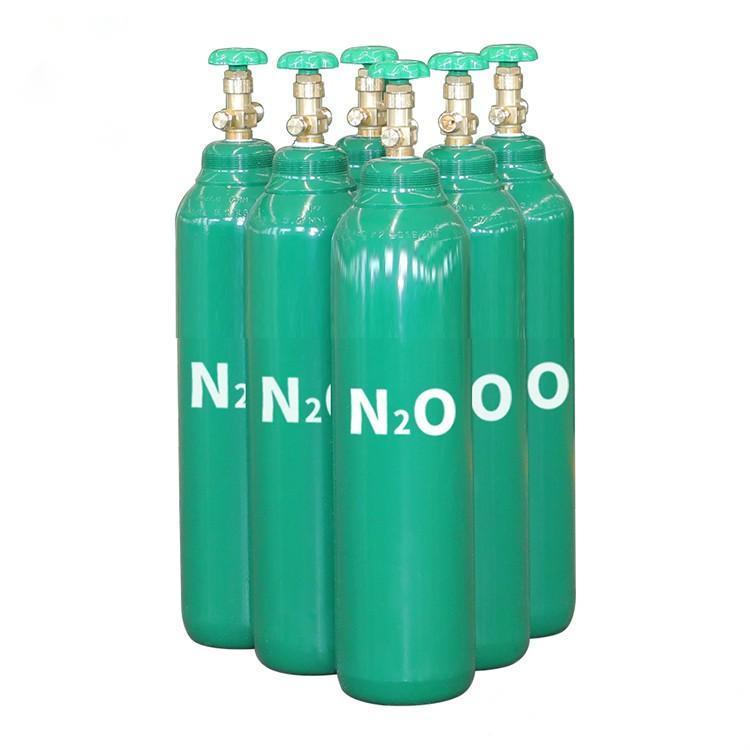
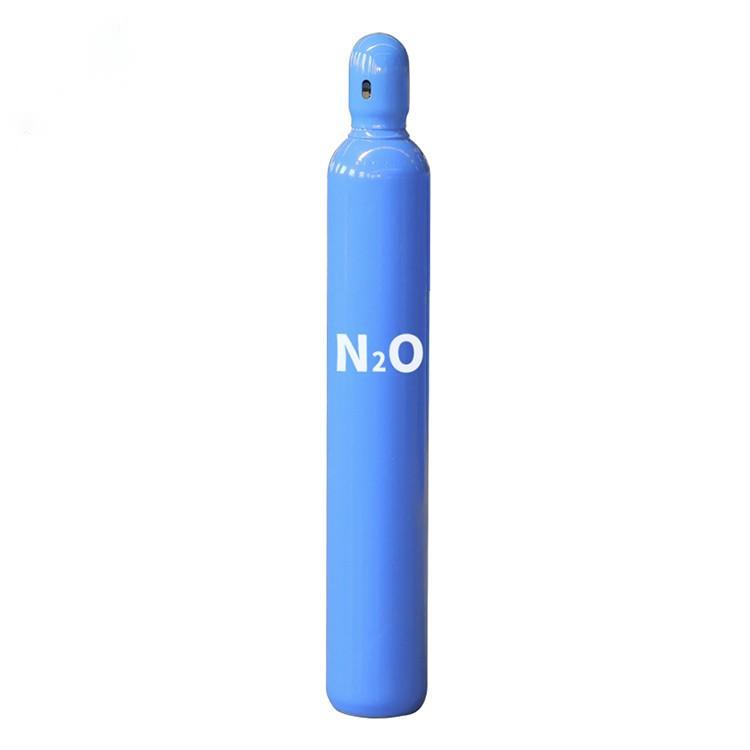
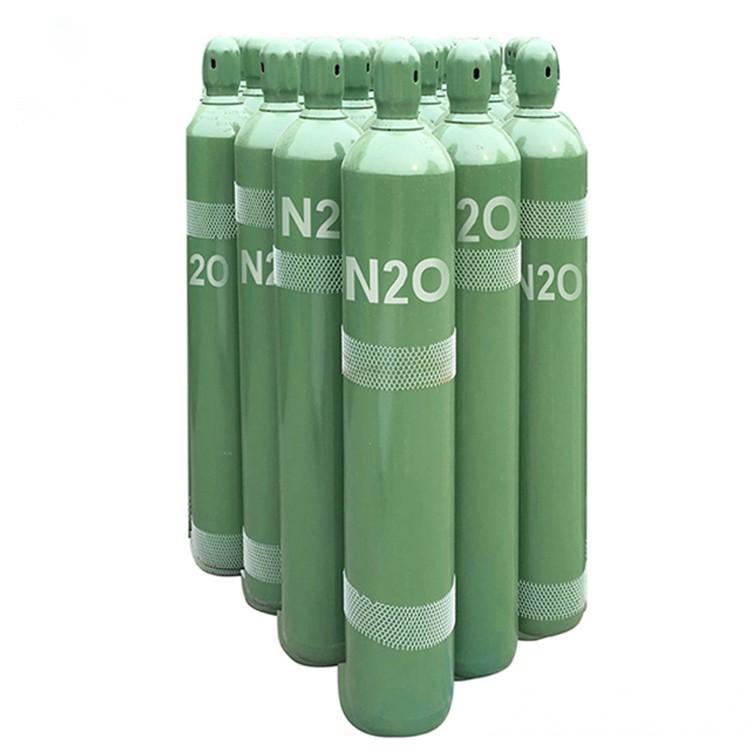
Nitrous Oxide
Aliases: Nitrous oxide, Laughing gas
CAS Number: 10024-97-2
UN Number: 1070
EINECS Number: 233-032-0
Molecular Weight: 44.013
Appearance: Colorless gas with a sweet taste
Melting Point: -91°C
Boiling Point: -91°C
Density: 1.8 kg/m³
DOT Class: 2.2 & 5.1
Label: Non-flammable gas, Oxidizer
Packaging Specifications
| Steel Cylinder Specifications | Capacity | Valve Type | Weight |
|---|---|---|---|
| 40L | CGA540 | 24kg | |
| 50L | CGA540 | 30kg | |
| International Standard Cylinder | 19 ton |
Industrial/Medical Grade Nitrous Oxide 99.9%
| Specification | Value |
|---|---|
| Nitrous Oxide | 99.9% |
| Carbon Monoxide | ≤ 20 ppm |
| Oxygen + Argon | ≤ 200 ppm |
| Nitrogen | ≤ 600 ppm |
| Moisture | ≤ 30 ppm |
Electronic Grade Nitrous Oxide 99.9995%
| Specification | Value |
|---|---|
| Nitrous Oxide | 99.9995% |
| Carbon Monoxide | ≤ 0.01 ppm |
| Oxygen + Argon | ≤ 0.02 ppm |
| Carbon Dioxide | ≤ 0.01 ppm |
| Nitrogen | ≤ 0.17 ppm |
| Moisture | ≤ 0.20 ppm |
| Nitric Oxide | ≤ 0.01 ppm |
| Hydrogen | ≤ 0.01 ppm |
| Methane | ≤ 0.01 ppm |
| Nitrogen Dioxide | ≤ 0.01 ppm |
| Ammonia | ≤ 0.01 ppm |
Gas Introduction
Nitrous oxide (N2O), commonly known as laughing gas, is an inorganic compound and a hazardous chemical. It is a colorless gas with a sweet taste and acts as an oxidizer. Under certain conditions, it can support combustion but remains stable at room temperature. It has mild anesthetic properties and can cause laughter when inhaled.
As an inhaled anesthetic, nitrous oxide has been widely used in medical practice but is now less common. Breathing a mixture of nitrous oxide and air at low oxygen concentration can cause suffocation. A mixture containing 80% nitrous oxide and oxygen can induce deep anesthesia, with the patient typically waking up with no residual effects.
The commonly known “laughing gas” has been used for anesthesia in medical surgeries, but it can cause oxygen deprivation in the bloodstream. Prolonged use may lead to hypertension, fainting, or even heart attacks. Long-term exposure can also result in anemia and damage to the central nervous system.